
The teen idol survives
on Olivia Rodrigo and the world that preceded her

· · ────── ꒰ঌ·✦·໒꒱ ────── · ·
Thank you for reading words from eliza! To support my work, consider becoming a paid subscriber. Your support lets me do stuff like spend 6 hours straight writing about pop stars instead of cleaning my house. Thanks!
I. KAMIKAZE
The teen idol has a tragic legacy. She’s a famous child, working while her peers are befriending one another and developing identities in small containers. Her container is big, bigger than the stage or the television screen. Her container is the industry, the internet, the world. Normal children are unlucky enough to shoulder the burden of their parents’ expectations, but she is gifted the responsibility of considering the fans, those reaching creatures that supposedly give much more than they take. Though they sure seem to take a lot. The famous child is generating income that is solely dependent on the maintenance of a personal brand while that brand goes through puberty and changes in immeasurable ways — physically, hormonally, psychologically, and spiritually. The famous child is debated about, decided upon. One of the questions is: is she hot? This gets posed shortly after the child reaches double digits. She has all manner of eating disorders, relationships with older men (inappropriate romantic enmeshment), relationships with older women (sanctioned parasitic careerism), and has been photographed smoking cigarettes. When she’s finally old enough to speak for herself, she often doesn’t know how to, having never been allowed to practice the skill before. Sometimes she dies young, other times she fades pitifully into the shadow of a drug habit, or worse, total irrelevance.
When I was young, I was obsessed with a Marina and the Diamonds song called “Teen Idle.” It’s about being a teenager and wanting to be adored and also wanting to die, because being depressed is sometimes the closest we get to embodied living, and because death is what happens to girls who are adored too much. At twelve, I understood every word and sang along with fervor: “FEELING SUPER SUPER SUPER SUICIDAL!”
This kamikaze impulse is part and parcel of being a teenage girl, that maniacal high of wanting what you want so badly that you must also imagine yourself destroying every piece of it. Coincidentally, and unfortunately, this is also how we feel about the teen idol herself.
II. GUTSY
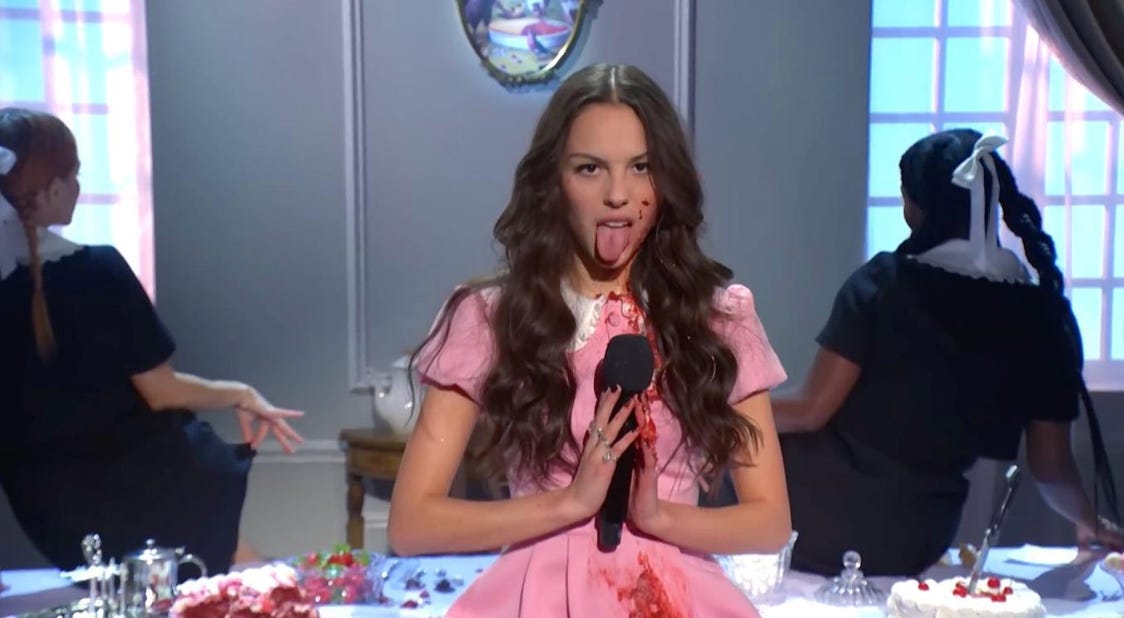
“I want blood, guts, and chocolate cake”
— Marina and the Diamonds, “Teen Idle”
I think Olivia Rodrigo is awesome. The music is undeniably, consistently great, and Olivia’s attitude towards the process of creation is one of the most heartening perspectives in the industry right now. She’s a self-described fangirl who embraces all the best aspects of loving something, which is to say that she makes an effort to be a part of, and therefore enrich, the thing itself. I imagine that it would be easy to become wildly famous and immediately distracted by the access, the money, the shoes; Olivia has great shoes, but she also utilizes the better parts of such ascendancy by collaborating with her idols and taking her work seriously enough to merit putting herself in conversation with them.
In a music culture of self-flagellating individualism, algorithmic wars of attrition, and watered-down trend cycle regurgitation, Olivia stands apart by having clear references and being unafraid to reference them. She plays the game, but has her terms; in her most recent album cycle, she prioritized live debuts over the increasingly popular, endless waterfall release of singles, trying to chance the streaming algorithm. A clear believer in art as work, she’s collaborated with several artists across mediums over the course of her most recent campaign and prioritized a cohesive visual language above a one-off viral moment.
Plainly put, I think Olivia Rodrigo is good for music. I also think that the progression of her career is a sign of the times. In rare form, the sign is actually quite good.
+
Teen girls are our cultural lightning rods, and few female stars are able to rise into adulthood unscathed from the projections of the public and the claw marks those impressions leave behind. Olivia has many analogs, depending on what facet of her career one chooses to focus on (this, too, is why I find her so compelling as a modern composite of teen stars throughout history). Though, comparisons are fraught.
On Wednesday, I drank a liter of beer outside in the sticky hot summer sweat with my friends and reaped the benefits of being a bandwagon Knicks fan, which include sliding in at the last second to watch the makings of NBA history and screaming raucously on the street with strangers. Throughout the game, the camera made occasional passes through celebrity row. Mostly, the crowded bar used this break in the game to grab more drinks or bum cigarettes outside. I was turned away from the screens, talking to a friend, when I heard loud jeers erupt from the bar. Startled, I jerked back towards the television. Taylor Swift was on screen.
If I know nothing else, I know that, despite all there is to critique about Taylor Swift (and there is plenty!), here is why women, sometimes inexplicably, defend her: the low rumble of men, yelling and boo-ing, was enough to make my face flush before I even knew what was happening. I refuse to let myself feel dramatic for the way my body registered a slight, involuntary level of threat — as many women’s bodies do when angry men are in the room. The last time I heard this happen at a game was in response to, um, the child rapist war criminal who is our president. This time, it was Taylor Swift.
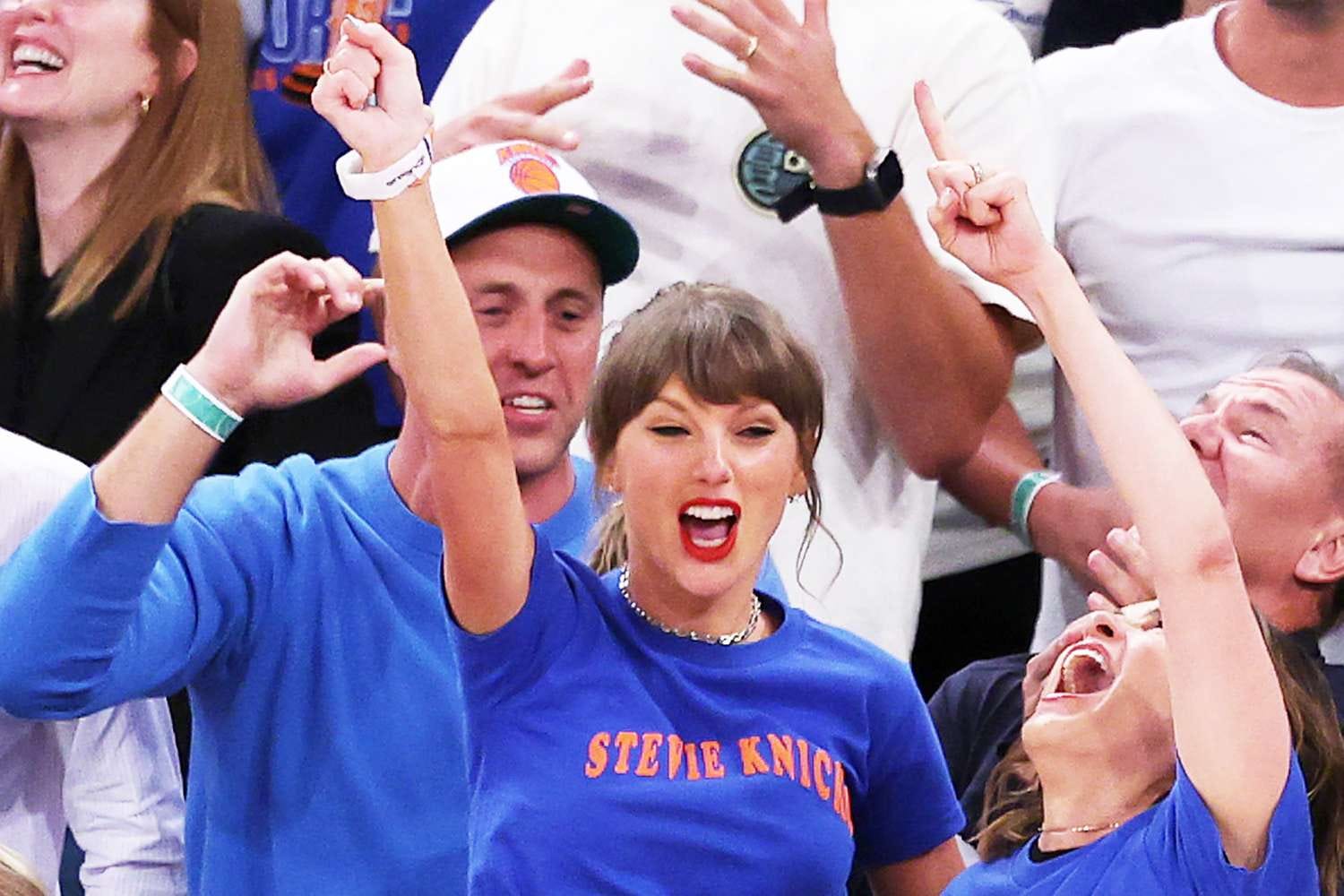
I wondered about this, curious as to what any individual man might say in response to the question, “Why did you just yell at an image of Taylor Swift?” My hunch is that they wouldn’t really have an answer. And, if they did, it certainly wouldn’t be “because she remains silent on Palestinian genocide despite her unparalleled public influence” or “her capitalist greed has created an unstoppable ripple effect throughout the whole of the culture industry.” My hunch is also that almost none of them, in the privacy of their own homes, would have been moved to the point of vocalization. This was a performance done by and for the other men in the room. It was done to solidify the in-group of men as men, and, worst of all, it was performed seemingly involuntarily by all who participated.
III. I MACHETED THROUGH THE JUNGLE
Women can be touchy about Taylor Swift because she is, very often, our cultural shorthand for “women, generally.” This is unfortunate for many reasons, not the least of which being that Taylor Swift is basically the farthest you could get from representing the average American woman in practical terms. But she is the primary representative of white American womanhood, which, through a branded approachability, has made space for the culture to reproduce its symbol in a schizophrenic kaleidoscope of ways — from wholesome friendship bracelets and feminine soul-bonds to vile Neo-Nazi claims of being an “Aryan goddess”— as well as her personal politic of tactfully deployed neoliberalism.
You will notice that there is no cultural shorthand for “men, generally,” because men, generally, are allowed a degree of individuation that does not result in their shortcomings becoming representative of the group as a whole. And the shortcomings of men, that in some ways should be representative of the group due to their ubiquity and impunity, are usually not deemed their problem.
The bombshell of the Epstein files (STAY WITH ME!), which revealed a conspiracy so terrifying and far-reaching that it basically vindicated the craziest people that have ever existed vis-a-vis a bona fide pedophile elite that ran tens of thousands of men deep, has all but vanished from cultural conversation. There really was a giant network of men who were trafficking young women and girls, and nearly all of them were rich enough to be politically influential if not acting politicians themselves at the time of their crimes. The details were horrifying and undeniably substantiated. Someone had to be punished. And, of course, no one was.
Well, not no one!
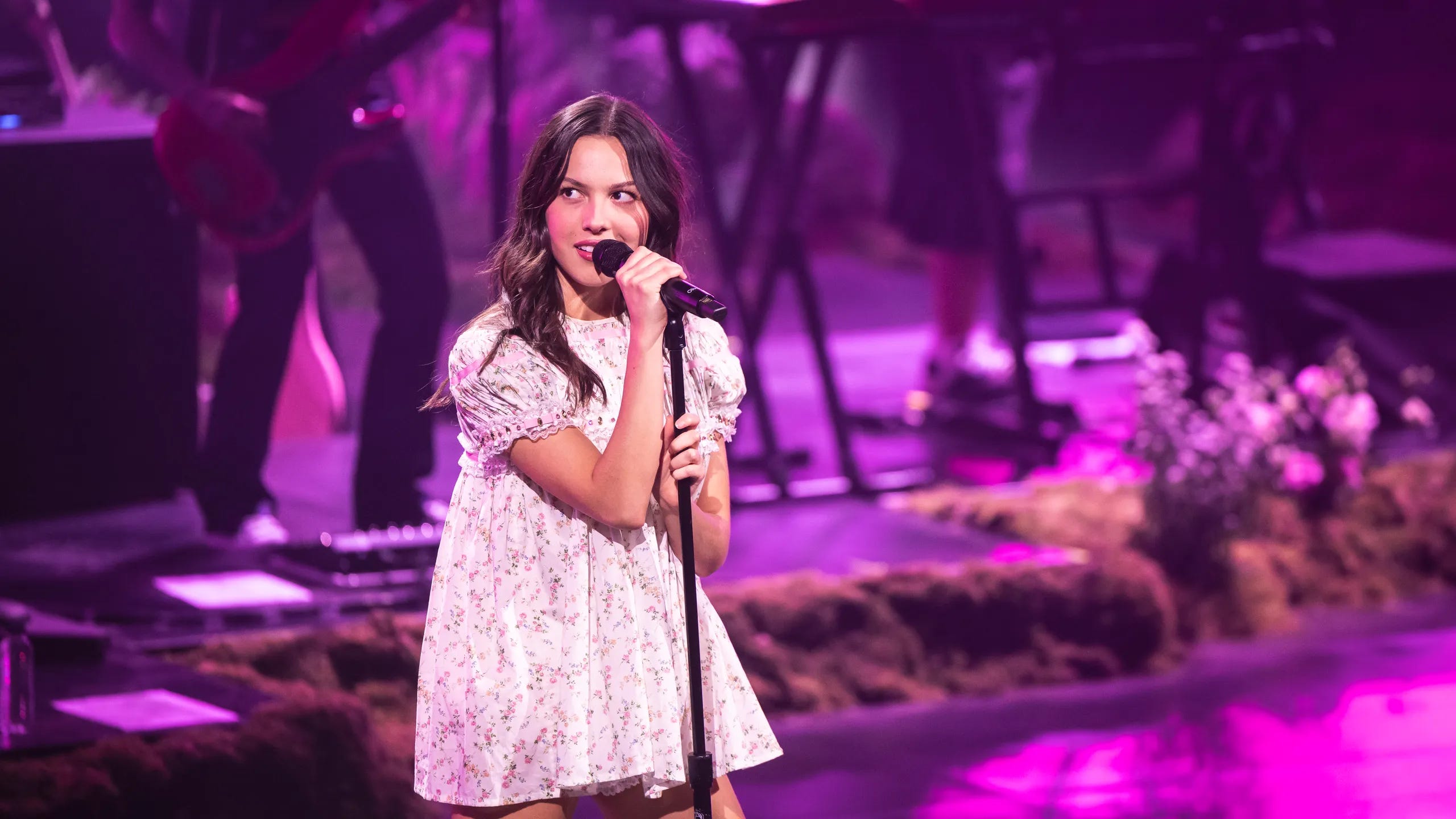
Olivia Rodrigo’s “babydoll dress” controversy hinged on the idea that, through her propensity for shapeless, floral dresses, she was aiding and abetting a culture of pedophilic beauty standards. My personal feelings about this were summarized perfectly by Olivia herself in an interview with the New York Times’ Popcast: “I felt cool and comfortable in it. And I just think if we start dressing in a way that’s like, ‘Oh, I don’t want some fucking freak to think that I like, am sexy, like a baby,’ or some crazy thing like that […] I just think it’s losing the plot.1”
Losing the plot, indeed. I need to see, at a minimum, 12,000 men publicly convicted of their pedophilic crimes before I will even entertain a word of “Olivia Rodrigo babydoll dress discourse.” And yet, her willingness to engage with the conversation in this way — thoughtfully, clearly, and unapologetically — and the culture’s eventual consensus of agreement with her, struck me as a hugely significant moment. Can you imagine a widely beloved pop star, even ten years ago, referring to the fucking freaks as fucking freaks and everyone being cool with it?
+
In the best sick-day film known to man, Sing Street (2016), there is a scene in which the James Reynor character (wearing the literal funniest and worst wig I have ever seen in my life), fills his younger brother in about what life was like before he was born:
“Do you see that guitar? I used to be able to play that guitar well. I used to ride hot girls. I could run 200 meters faster than anybody in my school. You’re the youngest. You get to follow the path that I macheted through the jungle that is our mad family. I was alone with them for six years. You think they’re crazy now? Think about what they were like when they were in their late 20s […] I was in the middle of that, alone! And then you came along, thank God! And you followed the path that I cut for us. Untouched. You just moved in my jet stream. And people laugh at me, Conor […] And they praise you, which is fine! But once, I was a fucking jet engine!”
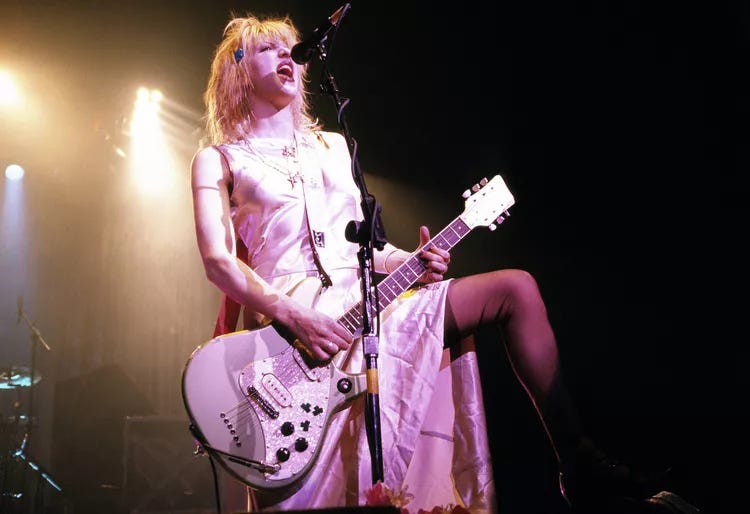
Olivia Rodrigo is completely special on her own accord, unique in a way that is irresistible to young teen fans and established music critics alike. And she is also a fascinating composite of the women who came before her, women who macheted through the jungle that is our mad culture. I realize that I have a problem with narrative, with wanting bad things to lead to good things, and for an inevitable conclusion to arrive and make all the pain ultimately worth it. But it’s hard not to look at the arc of Olivia’s career and not see the women who made it possible, women who struggled against the tide so as to make space for a teen idol to finally survive intact.
IV. BREAKING THE EQUATION
The babydoll dress debacle is an example of the formula the culture foists upon young women in order to trip them on their stairway to success: I am going to make you the example of a problem that we as a culture have yet to solve, ask you to solve it in ways both contradictory and impossible, and blame you no matter how you choose to respond. Olivia, like many women before her, chose to opt out of the whole premise entirely. Only this time, the culture seemed to listen.
The culture is listening in other ways too; on the morning of writing this, “You Seem Pretty Sad for A Girl So in Love” has been named Best New Music by Pitchfork. She’s been wholeheartedly, publicly embraced by (male!) industry legends like Robert Smith and Billy Joel. She is writing songs for girls — young girls, emotional, angry, sad, dramatic, listless, full-feeling girls — and the fact that girls are her intended audience is not being used as an excuse to write off her artistic achievements.
+
I’ve started my annual re-listen of Liz Phair’s seminal record “Exile in Guyville.” Phair is another clear predecessor to Olivia Rodrigo and, for that matter, to most young women songwriters making music today. Phair personally influenced me without my knowing; I was writing poor imitations of her work long before I had even heard the songs directly, absorbing only their downstream effects.
Phair’s first record was rated a 0.0 by Pitchfork, her second a 2.0. At the time of her debut, like many women who were writing about their feelings, men, and their feelings about men, she was mercilessly picked apart by a culture that wanted women like that to get the message. We can’t stop you from speaking out, the message seemed to say, but we can make you wish you never opened your mouth. Pitchfork neglected to review “Exile in Guyville,” but eventually circled back on its 15th anniversary to award it a 9.6, if nothing else, to update itself with the times.
It’s always dangerous to proclaim that the culture is feeling favorably towards a woman, to the point where even verbalizing these thoughts makes me fear that I’m going to trigger the pendulum to swing back in the other direction. But the Olivia Rodrigo arc is about more than a favorable score from a music magazine or a nice quote in a podcast interview. She’s an entry in the canon, a fully established legend at only 23. She truly inspires me, as both a woman and a musician, and she gives me hope that one category need not negate the other. I only hope that we can let her light shine freely, so that it can illuminate the path for all the girls to follow.
quote edited for clarity
Loved this. Last night, in anticipation of her album release, I listened to Olivia's interview with Kathleen Hanna (https://www.youtube.com/watch?v=PnAf83vYtiw) and have been thinking a lot about the importance of, for lack of a better word, legacy. The legendary female rock musicians are in many ways most acclaimed and remembered for their earlier work, but there is so much explored in a discography from a woman who continues to live, think, and make art as she gets older. What does it look like for righteous rage to develop beyond the nest of teen angst? I know it is sacrilegious to many to imply this given that Olivia is an industry-backed mainstream star, but I do think that she plays a really special part in keeping the spirit of riotgrrrl alive. She knows that being liked by ten-year-old girls is more punk than being liked by some pedantic music nerd who rolls his eyes when I mention riotgrrrl (though he too probably also likes Olivia's music lol).
In the interview they talk about how, simply put, women making rock music are really special and cool and important. On that note I wanted to mention that your music is very special to me in this vein; "Modern Woman," "Like the Boys," "Mythologize Me," and "Glitter" sit alongside Rodrigo's "all american bitch" in the tier of best feminist songs of the 2020s. Seeing them performed live in Toronto was really special, thank you :)
I am constantly in awe of Olivia's openness and sincerity in interviews (and in her songwriting!), and I think that's unfortunately what so many people (read: haters) find troubling about her. In that Popcast interview, they talked about how she's so forthcoming about her inspiration that it leads to people calling her out for straight-up stealing from artists and her retroactively issuing songwriting credits, which I find sad. Reminds me of early reactions to Taylor's "surprised face," and similar expressions of her earnestness. I think Olivia's such a sharp artist; this album has endeared her to me even more.