
Fake Fans
into the digital marketing agency that creates your music taste

Edit 4/2: One day after this piece went up, Chaotic Good made significant changes to their website — including pulling the “Narrative Campaign” section completely. Some of the artists I write about here no longer feature on the website, though it is not clear if they are still clients of Chaotic Good (my suspicion is that they are, and that their managements are removing public associations with the company). That being said, some of the examples I cited here can no longer be traced back to their website, but feel free to use the waybackmachine or similar to check my work!
If they had it their way, music business executives would rather not deal with the fans at all.
Fans are a complicated, messy, unpredictable group. Sometimes they love a record, sometimes they hate it. Sometimes they love the single and hate the record. Sometimes they love the record and hate the single. They’re teenage girls, oldhead uncles, Gwenyth Paltrow, and the guy checking your groceries out at the Safeway. Their communities are niche and complex, their tastes formed not only by the artists they listen to but by the opinions of other fans. As an executive, you can inflate the charts, you can buy streams. You can buy vinyl (though who even cares about that). You can even pay people to crowd the shows once or twice. But for any art worth your investment, you will eventually need real people to reliably, measureably, and genuinely care about it.
In the dream world of an executive, fandom is something like a parasitic disease — contagious through mere exposure, trafficking quickly between hosts with immediate contact and little to no external intervention. This way, the executive needs only to create a Patient Zero and watch the snowball gather material. The disease would spread seamlessly, easily. It would be viral.
Last week, I came across a Billboard interview with the founders of Chaotic Good Projects, a digital marketing agency that promises to create virality by, among other things, manufacturing hundreds of fake fan accounts for musicians.
Having been a working musician for the better part of the last decade, this was not particularly surprising to me. Commercial music exists for a reason (it is widely liked and extremely profitable), and it is no secret that there is a gigantic machine that is not only behind our biggest stars, but playing a part in breaking the new mainstream. There are kinds of music that are compatible with TikTok trends, and others that rely on a broader context, a less immediate delivery. Distinguished taste is something people pride themselves on — the idea that they have some resistance left still, that they don’t have to listen to the Alex Warrens of the Sombrs of the world simply because the algorithm has offered its teat to suck.
Alex Warren and Sombr are, to no one’s surprise, clients of Chaotic Good Projects. These two are part of the new mainstream broken primarily by algorithmic social media platforms, though Chaotic Good’s client list also includes more established pop giants like Dua Lipa, Shawn Mendes, and Justin Bieber. The careers of these people, while obviously influential in my industry, are not really what I’m interested in. I’m interested in the people who made it without capitulating completely to commercial demands, whose personas don’t eclipse their work. People who are making stuff that’s simultaneously viable enough to be profitable and still uncompromising on a vision. I’m interested in the real rock stars, if we have any left.
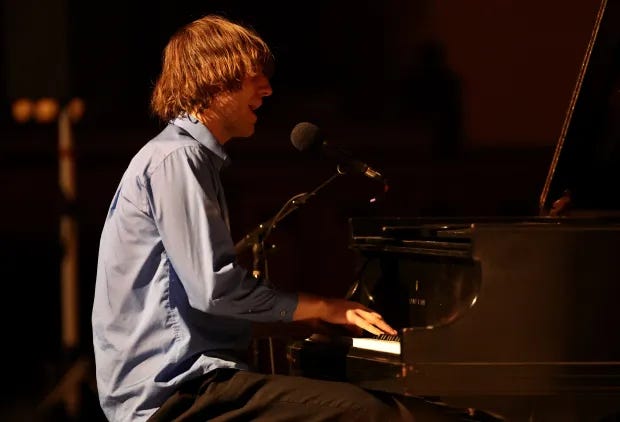
The first time I heard Cameron Winter’s “Love Takes Miles,” I probably heard it one hundred times in a row. I had found it a week after its release and became immediately convinced that I was one of the few people in the world who knew about this perfect, beautiful little secret. At the time, the song had just under a million streams, and I was obsessed with showing it to everyone. Everyone soon caught on. The next year, it was the summer of “Love Takes Miles.” I played it in rental cars in Los Angeles and off my phone speakers in the most remote parts of Chimney Rock, North Carolina. The rest of that record was a similar revelation for me. I had discovered some kind of magic.
Though, I can’t remember exactly how I discovered it. I didn’t hear about the song from a friend or a music blog, and can’t recall a particular memory — only that of seeing the title somewhere on my phone and searching it up on Spotify. How I came to know the song is almost irrelevant information at this point, eclipsed completely by the experience of loving the song on my own terms, creating my own memories with it. The song just came to me, from somewhere, populating seamlessly in a stream of consciousness. A stream of consciousness, otherwise known as an algorithm.
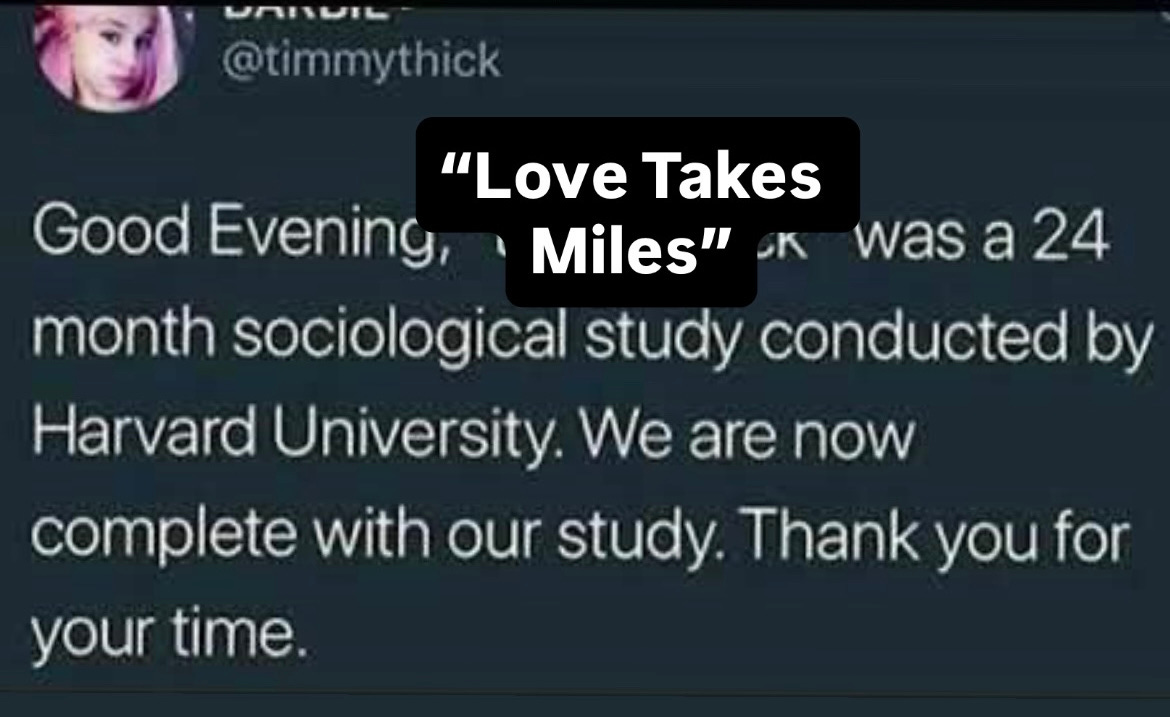
“Loves Takes Miles” was worked as a part of a “narrative campaign” by Chaotic Good Projects. A “narrative campaign” is one of four kinds of services the agency offers — the others being “UGC” (which stands for user-generated content), “Fanpage,” and “Brands and Media.” According to the agency’s website, they also worked narrative and UGC campaigns for Geese’s record “Getting Killed.”
When I discovered that the same media apparatus propping up Sombr and Alex Warren (the term propping up here is used intentionally — to me, there is almost nothing compelling about these artists aside from their aggressive social campaign) was also boosting Cameron Winter and Geese, I was shocked. I thought this was the kind of thing that was only deployed in service of mass-market, commercial pop — secretly, also, that this was the only kind of music such marketing would work for.
Alternative music used to mean just that — an alternative to the mainstream — something that couldn’t simply be adopted by everyone else through pure exposure, through virality. There are certainly arguments to be made about the mass appeal of a band like Geese, but no one in good faith could compare them to the commercial pop stars that populate Chaotic Good’s roster.
But the roster runs deep, far past the predictable internet sensations one could expect (and, apologies to the internet sensations, including people I consider to be genuinely great musicians). Geese and Cameron Winter, but also Dijon and Mk.gee. Laufey and Wet Leg. Oklou and Jane Remover.
I have no doubt that these artists could have ascended without the assistance of Chaotic Good because they are great musicians, and many people enjoy their music. I believe that this could have happened in the same way that I believe my friends in bands who play at bars could be the biggest musicians in the world if the industry were willing to facilitate their exposure. Much is said about hundreds of thousands of AI songs being uploaded to streaming services every day. Not enough is said about the many bands that are playing to no one, so many bands that could be huge if given the opportunity to be heard.
But the industry has changed. “Being heard” is not just about putting out music or even promoting it. The gatekeepers hardly matter anymore. SNL performances and favorable Pitchfork reviews don’t move the needle — TikToks about those things do (Chaotic Good ran a UGC campaign specifically to promote Oklou’s Tiny Desk performance). So, in this new landscape, is creating hundreds of fake accounts just par for the course of being a good publicist?
Though their website gives next-to-no details aside from who their clients are, Chaotic Good’s UGC (user-generated content) campaigns seem self-explanatory. Chaotic Good is paid to create accounts that generate content and simulate trends, which will ideally result in organic users generating content to further the trends themselves. Founders Jesse Coren and Andrew Spelman know that the internet is highly suggestible, which also happens to be the ethos of their narrative campaigns.
“A lot of what we do on the narrative side will be controlling the discourse,” said the founders, “I think most people see a video or see something about an album that came out and it’s like the first thing that they see or that first comment that they see is their opinion even when they haven’t heard the whole album.”
Well, that sounds quite unfair. What is an agency to do when its clients are at the mercy of an unruly TikTok comment section? They become the comment section.
“I think in the past, let’s say like a label and a management team do a great job. They get their artists on SNL or Tiny Desk or Triple J or something like that. Then they post it and then they kind of wait for the comments […] what we do at Chaotic and with our management clients is, the second SNL drops at midnight, you should post a hundred times saying that was the best performance of the year.”
The phrase “you should post a hundred times” is said again and again over the course of the Billboard interview. As an artist, I am used to getting that instruction myself from management and label executives — post, post, post, try to hit the algorithm, fail miserably, post, post, post again, try covering other songs, try posting memes, try posting your feet, try posting your songs again, well, no, try posting the feet again. Coren and Spelman know that sucks, and their solution is for the burden to be shifted away from artists and onto agencies like theirs. When they say, “you should post a hundred times,” it is an instruction for their own employees and contractors and, for once, not the artists themselves.
To be honest, it sounds appealing to me. I’ve written extensively about the burden of the attention economy on artists and how it denigrates artistic efforts as a whole, especially as it applies to the relationship fans have to the work. I have no doubt that musicians would literally pay to not have to do this, which is exactly how Chaotic Good makes their money. The founders don’t shy away from the dystopian implications of the new algorithmic economy, either; “it does get overwhelming because I don’t think the pendulum is swinging back anytime soon. I think what we’re seeing is things get more and more extreme.”
The offer is not to create a new paradigm but to be the biggest fish in the pond. If 100 people think your song sucks, Chaotic Good will create 200 people who think your song is awesome. There’s no going back to pre-Napster times. Now that songs are files and files are Godless, record sales mean nothing, and the “analog revolution” won’t change that. Records used to mean fans, which meant money; now that there are no records, it’s just the fans and the money, and fans are a renewable resource. Chaotic Good knows that you can create a fan through imitation.
When Coren and Spelman get specific about their marketing campaigns, they say that their team is constantly monitoring TikTok for trends. Quotes do particularly well, with the marketed song integrated seamlessly into the background. “Yeah, just kind of any quotes, just phrases that could be relevant to something that’s happening at the moment […] It’s things you share with your boyfriend, your girlfriend, your brother, your sister.” The interviewer offers, “I’ve seen many times on my TikTok feed, maybe a picture of a coffee cup with a quote that’s like, “I can’t believe I found you in this world.””
These are fans created through pure association — this quote reminded me of this person, and it just so happens that a song was attached to this experience. I may, then, listen to the song on my own in order to remind me of the experience I had of watching a TikTok. Chaotic Good seems to aim for such results.
In order to boost the profile of indie folk musician Kevin Atwater (whose song “startripping” I found on TikTok years ago and played every day for months), Chaotic Good started pumping out edits to the show Yellowjackets, to much success: “The song has 40,000 creates on TikTok, and it’s really improved a lot […] But what it’s done is now every time he posts with the audio, he’s supposed to do well because he has this trending audio, and it’s tied to his brand. And now fans show up dressed as the characters, and it’s kind of been this huge moment for him.”
Is this success? Yellowjackets is a good show, which is lucky. But algorithmic associations are not always so tasteful. What if the nearest analog to “yearning” becomes the inevitable Ryan Murphy yaoi adaptation of the Columbine shooters? Those edits need soundtracks too — could it be your song?
I’d let it be mine. My utopia knows nothing of “short form content” or “trend simulation” or “narrative campaigns,” but my utopia is a bedtime story I stopped telling myself the first time I got a $30 Spotify payout. This industry is a dirty one, and the cost of success has almost always been paid in dollars and cents — usually by a big label, a management company, or someone’s dad. If a label wanted to contract Chaotic Good on my behalf, I would accept such a deal handily and gratefully. The promise that industry has always made to artists is a tempting, paternal one: you create the magic, and I’ll take care of the rest.
This isn’t to say that swimming against the current is futile, only that I see the kinds of developments made by Chaotic Good as an appropriate weapon in the algorithmic war of attrition. And indeed, Chaotic Good views this as a war; throughout the Billboard interview, the founders use terms like “hand-to-hand combat” to describe the process and referred to the early stages of production as “building an army.”
I suspect that the more ubiquitous this service and its volumetric output become, the more bands will resist it, pulling back from streaming and socials altogether in favor of embracing hyper-local, scene-based methods of growth. This wave has already started, with the rightful backlash to and divestment from streamers. I wonder about the longevity of the “trend simulation” strategy — if fans will eventually catch on to it, and thus eventually rebuke it. After all, nobody likes falling for marketing. It surprised me greatly to hear the founders of Chaotic Good talk so freely about who and how they manufacture hype for, as it seems to me that it would be in the interest of artists to withhold such information from the public. But perhaps there’s nothing to be ashamed about. Or, there’s no need to be more ashamed of the tactics created to get through the world than of the world itself
I wonder also about fandom, that complex web of mostly young women creating worlds for themselves and their friends online, using art as a compass for self-discovery, connection, and meaning. I wonder if the marketing accounts, who exist primarily to post, ever engage meaningfully with other, genuine fan accounts. It seems to their advantage to connect themselves to the network of real fans. Do they? Somewhere, is there a 27-year-old in a New York office reading Cameron Winter fanfic on AO3 in order to ingratiate himself into the larger, realer army of young fans who do their job for free?
Some of these processes can be automated, and I expect they will be soon; posting indiscriminately is the number one service of bots worldwide, and has been even before the technology became sophisticated. But other things, I have to believe, can’t be done by machines or even by real people who are invested in art primarily because that investment is made with real money. Some things can only be created by the fans themselves, without whom Chaotic Good and artists everywhere would never again cash a check.
I’m on tour right now, trying my best to be present. I am promoting the shows, I am making short-form content, I am balancing the budget, I am trying desperately to find vegan options in North Dakota. Being on the road is kind of like being in a boat that’s full of holes, but you happen to have a bucket that’s exactly large enough to bail you out — as long as you keep hauling water. Debt can’t hit a target that’s always moving to the next city, trying to sell one more t-shirt. But when I have space to settle, I do. I look into the faces of the people in my crowd and become overwhelmed with love and gratitude, completely flooded with the kind of emotion I can only access in shared space, in shared work.
My record came out last October. It did not perform well, technically speaking. It’s not hitting large streaming numbers, none of my shows sold out, and I’m all but waiting to see if this is the year it’ll start putting me in serious debt. But I don’t know what hundreds of millions of streams would mean to me, what it would feel like. How do I touch that? How do I grasp it?
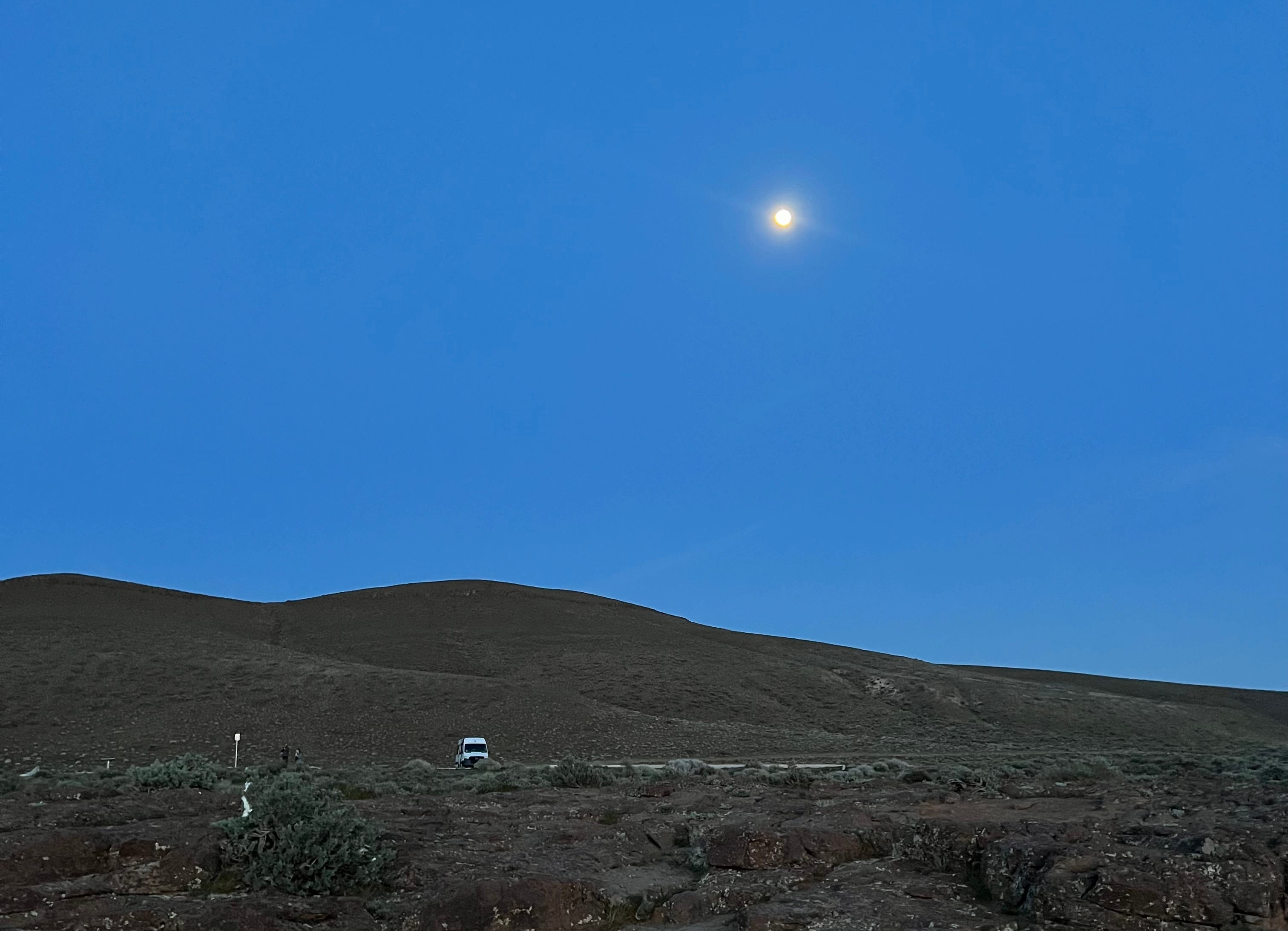
When I’m on the road, the thought strikes me hundreds of times a day: this is real. I see a wild buffalo rub its face against the mountainside. This is real. A teenager in the front row cries to a song I wrote when I was her age. This is real. The cliffside in rural Washington takes the breath from my lungs. This is real. I listen to “Love Takes Miles” with the windows down and think about my best friend, who I moved across the country to be near. This is real. My hands are on the fretboard. This is real. I run through the Badlands for the first time in my life, past the van, into the expanse. This is real. A sound escapes me and reaches you. This is real. This is real. This is real.
Oh, yeah… COME SEE ME ON TOUR!!!!!!!!!!!!!!!!!!!!!!!!!!!!! thanks
This was fascinating and also beautifully written. By the end, despite being reminded of my exhaustion with algorithms and the constant need to play into them or thwart them or whatever, I was reminded that an algorithm brought me here -- to binchtopia, to you, to your music and so to your writing. and this piece was beautiful and felt so real because it is! that line between organic and inorganic connection get so blurry online, but still, we're all here getting to meet each other in the end, I guess. one way or another.
Like you say, no one wants to be tricked by marketing. But there is a bit of a noble goal behind this. The primary hurdle of making art is making sure it finds the right people. Maybe a bot led me to finding au pays du cocaine, but no algorithm controls what happens in my lungs heart and stomach when i listen to that outro.